

When you think of Thailand, golden temples and tropical beaches might come to mind. Beyond these, numerous hiking trails await exploration. From mountain ranges in Northern Thailand to jungle-covered national parks in Southern Thailand, the country’s landscapes invite tourists to slow down, reconnect with nature, and experience the country’s rich biodiversity.
Hiking is also a perfect opportunity to embrace eco-tourism, support local communities, and experience Thailand’s cultural heritage. Every trail in Thailand offers a new perspective on the country, whether you’re climbing toward panoramic viewpoints, walking through dense bamboo forests, or exploring waterfalls in national parks.

THE NORTH
Doi Inthanon National Park, Chiang Mai
Also known as the “Roof of Thailand,” Doi Inthanon is 2,565 meters above sea level, making it the country’s highest peak. The park’s cool climate, misty forests, and lush valleys make it ideal for year-round hiking. The Kew Mae Pan Nature Trail is one of the most popular routes, famous for its breathtaking sunrise views and a scenic ridgeline walk above the clouds.
For hikers who want a longer trek, Doi Inthanon also offers guided routes through Hmong and Karen hill tribe villages, allowing hikers to learn about local traditions and sustainable ways of living in harmony with nature.
Doi Suthep-Pui National Park, Chiang Mai
Just a 34-minute drive from Chiang Mai, Doi Suthep combines accessibility with adventure. The Monk’s Trail is a favorite for both locals and travelers alike. It’s a steep, shaded path that winds its way up to Wat Pha Lat, a serene forest temple, before continuing to the iconic Wat Phra That Doi Suthep. Beyond the temple, more advanced hikers can continue deeper into the park, where waterfalls, viewpoints, and mountain flora abound.
Phu Langka Mountain Forest Park, Phayao
Just a 3-hour drive from Chiang Rai, Phu Langka offers panoramic views over misty valleys and limestone karsts that glow golden at sunrise. The main trail takes you through wildflower meadows and pristine forest, perfect for photographers and nature enthusiasts. Local guides often accompany hikers to help preserve the delicate ecosystem and support nearby villages through community-based tourism.

THE NORTHEAST
Phu Ruea National Park, Loei
For those who love cool weather and sweeping vistas, Phu Ruea, also known as “boat mountain,” is a must-visit for hiking enthusiasts. Its highest peak stands at 1,365 meters and offers a beautiful panoramic view of rolling hills and morning fog. Well-marked hiking trails lead to scenic viewpoints, pine forests, and flower fields that bloom throughout the cooler months.
There are local initiatives in the area that focus on forest conservation and minimal-waste visitor practices. Many homestays nearby offer eco-friendly accommodations that let travelers experience rural Isan hospitality sustainably.
Phu Phan National Park, Sakon Nakhon
Covering over 600 square kilometers, Phu Phan National Park has sandstone cliffs, ancient rock formations, and seasonal waterfalls that are perfect for tourists. The park has multiple trails that range from relaxing nature walks to challenging ascents to panoramic lookouts. Along these paths, visitors can discover prehistoric rock art and rare wildlife, including hornbills and civets.
As an essential watershed area, Phu Phan emphasizes conservation education, encouraging visitors to leave no trace and respect the natural environment.
THE CENTRAL REGION
Khao Yai National Park, Nakhon Ratchasima
Known as Thailand’s first national park and a UNESCO World Heritage Site, Khao Yai is home to one of the most diverse ecosystems in Southeast Asia. Home to elephants, gibbons, and over 300 bird species, the park has numerous trails, from one-hour walks to multi-day jungle treks.
For a more immersive experience, guided treks are available, led by rangers who share insights into wildlife tracking, plant identification, and conservation efforts.
Erawan National Park, Kanchanaburi
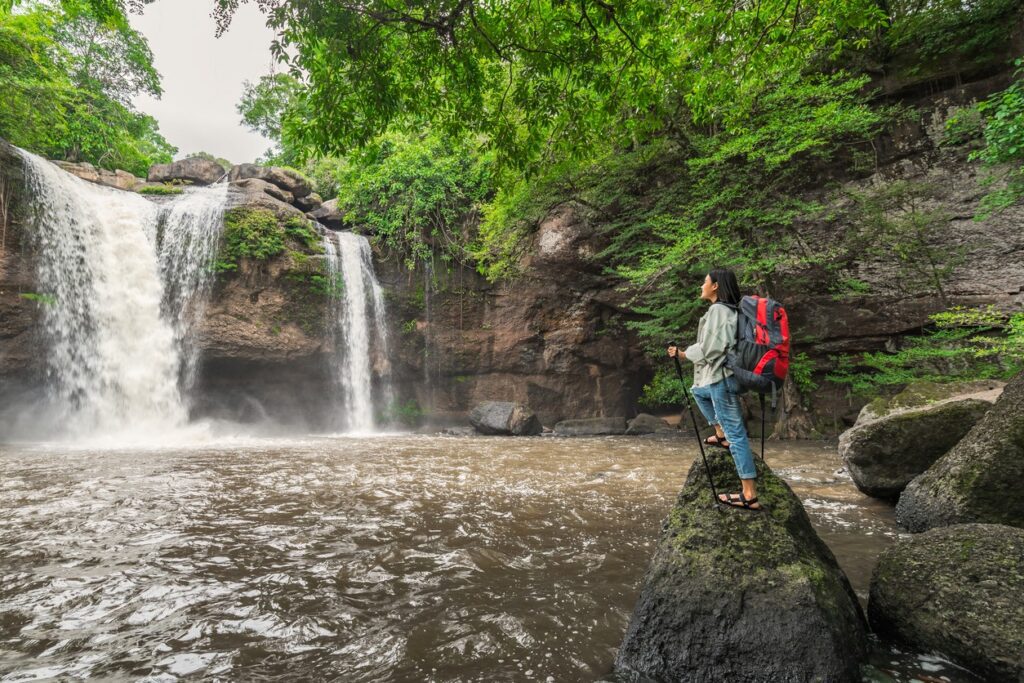
Known for its emerald-green waterfalls, Erawan National Park is one of Thailand’s most picturesque hiking destinations. The seven-tiered Erawan Falls Trail leads hikers through dense jungle, where each level reveals a new turquoise pool perfect for a refreshing dip.
To protect the park’s ecosystem, visitors are encouraged to bring reusable water bottles and avoid single-use plastics. The park’s rangers and volunteers work continuously to maintain its pristine condition.
THE EAST
Khao Chamao–Khao Wong National Park, Rayong
A lesser-known gem in Eastern Thailand, Khao Chamao–Khao Wong offers trails that meander past clear streams, waterfalls, and limestone caves teeming with bats and swallows. The Khao Chamao Waterfall Trail is wonderful, with a series of cascades that culminate in a serene natural pool.
This park is part of Thailand’s efforts to promote sustainable travel along the Eastern Seaboard. By choosing local guides and eco-lodges, visitors help support conservation projects that protect wildlife and forest habitats.
Khao Ang Rue Nai Wildlife Sanctuary, Chanthaburi
One of Thailand’s most important forest reserves, Khao Ang Rue Nai Wildlife Sanctuary spans five provinces. Though hiking routes are limited to guided eco-tours, the experience is educational. Visitors can learn about reforestation, animal tracking, and the ongoing work to restore one of the country’s most vital ecosystems.

THE SOUTH
Khao Sok National Park, Surat Thani
Khao Sok is home to one of the world’s oldest rainforests. Limestone cliffs, emerald lakes, and dense jungle make it a top destination for adventure seekers. Hiking trails range from short loops around the visitor center to multi-day treks deep into the forest, where travelers can spot exotic wildlife and rare flora.
One of the highlights of the park is Cheow Lan Lake, surrounded by towering karsts. Visitors can combine hiking with kayaking or stay overnight in floating eco-lodges that minimize their environmental footprint.
Phuket and Krabi’s Coastal Trails
Beyond beaches and islands, Southern Thailand’s coastal regions also offer scenic hikes. In Phuket, the Black Rock Viewpoint trail rewards hikers with sweeping views of Nai Harn Beach and the Andaman Sea. In Krabi, the Dragon Crest Mountain (Khao Ngon Nak) trail is a favorite among adventurers. The trail is a 4-kilometer climb that ends with panoramic views of the coastline.
Local conservation groups often maintain these trails and organize clean-up hikes to encourage sustainable outdoor recreation.
Hiking with Purpose
The hiking trails in Thailand help travelers connect with local communities and ecosystems, fostering a shared sense of responsibility. Every step on these paths helps preserve the country’s natural wonders and supports locals.
If you plan to hike in Thailand for your next trip, make sure to carry reusable gear, stay on designated paths, and respect wildlife. Lace up your boots, pack your curiosity, and let Thailand’s wild beauty guide your journey.